Quick Summary
Overview: AI governance is the practical system that helps a workplace decide how AI is selected, approved, used, reviewed and controlled. Without it, accountability can become unclear.
- AI governance is the system for managing AI use at work.
- It covers rules, review, accountability, transparency and monitoring.
- Governance should be understandable to managers and workers.
- Practical next step: Start by making AI use visible and assigning clear ownership for each tool or use case.

Abstract AI data lines representing workplace AI governance and responsible decision support. Source: Unsplash.
Artificial intelligence is now used in ordinary workplace tasks: drafting emails, summarising documents, screening information, supporting customer service, analysing data and recommending next steps.
It affects employers, employees, directors, managers and anyone relying on AI-assisted work.
Readers will learn the core parts of workplace AI governance and why they matter.
Why this matters in practice
AI governance is the practical system that helps a workplace decide how AI is selected, approved, used, reviewed and controlled. Without it, accountability can become unclear.
In Australia, workplace AI should be considered in the context of privacy, cyber security, work health and safety, workplace relations, discrimination risk and ordinary management accountability. The right control depends on what the AI is used for, who uses it, what data it touches, how many people may be affected and whether the output can be properly checked.
A practical workplace example
A workplace might approve AI for drafting internal summaries, but not for making employment decisions. Governance turns that boundary into rules, training, records and review points.
The important point is that governance should follow the actual workflow. A tool that looks low risk in isolation can become higher risk when it changes a decision, influences a worker, handles personal information or produces a record that others rely on.
Common mistakes to avoid
- Treating governance as a one-page policy.
- Not assigning owners.
- Ignoring worker awareness.
- Failing to review AI use after deployment.
Governance considerations
Good governance does not need to be complicated, but it should be deliberate. A workplace should be able to explain why AI is being used, what controls apply, who is accountable and how concerns are reviewed.
- Create acceptable-use rules.
- Assign accountability.
- Manage data and privacy.
- Use human review for important outputs.
- Monitor and improve over time.
Human oversight and accountability
Human review should be meaningful. The reviewer needs enough information, authority and time to question the output, seek evidence, override the result or escalate the matter. AI should support human judgement, not remove responsibility from people.
Privacy, records and review
Before AI is used with workplace information, organisations should consider whether personal, confidential or sensitive data is involved. They should also decide what records are kept, how outputs are checked and when the use should be reviewed or retired.
For related guidance, see AI governance, AI governance framework, governance checklist.
AI governance is how a workplace makes sure those uses are visible, reviewed and accountable.
AI governance is not just a policy document
A policy helps, but governance is broader than a document. It is the day-to-day system that answers practical questions: who can use AI, what data can be entered, what decisions need human review and what happens when AI makes a mistake.
Good governance should be understandable to managers and workers, not only specialists.
Why it matters at work
AI can affect people directly and indirectly. A recruitment tool may shape who gets interviewed. A monitoring tool may influence performance conversations. A summary tool may change how a manager understands an incident.
When AI is unmanaged, people may not know it was involved or how to challenge an outcome.
Related Articles

AI Governance Controls
AI Governance Controls explains practical rules, approvals, testing and monitoring that help workplaces use AI safely, fairly and accountably at work.
Read article →
AI Risk Management
AI Risk Management helps Australian workplaces identify, assess and control AI risks before tools affect people, decisions, privacy, safety or data.
Read article →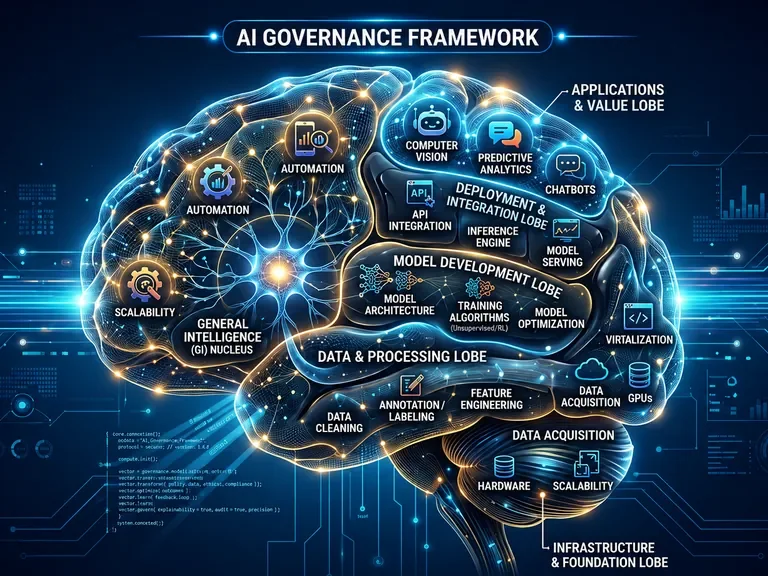
Workplace AI Governance Framework
Understand the practical building blocks for workplace AI governance in an Australian context.
Read article →Core parts of governance
- Visibility of AI use.
- Clear purpose and scope.
- Data and privacy rules.
- Human review for important outputs.
- Consultation and transparency where work is affected.
- Accountability for decisions and outcomes.
Frequently Asked Questions
What is AI governance?
A practical system of rules, responsibilities, controls and review for AI use.
Is AI governance just policy?
No. Policy is one part. Governance also includes approvals, training, records and monitoring.
Why does AI governance matter?
It helps prevent unfair, unsafe, inaccurate or unaccountable AI-assisted outcomes.
Where should a workplace start?
Start by identifying where AI is used and who owns each use case.
Key Facts
- AI governance is the system for managing AI use at work.
- It covers rules, review, accountability, transparency and monitoring.
- Governance should be understandable to managers and workers.
- Human review remains important for high-impact decisions.
- The goal is responsible use, not stopping all AI.
Useful Australian Resources
These links are provided for general education and context. They are not a substitute for advice about your organisation's circumstances.
- Guidance for AI adoption: foundations
- Guidance for AI adoption: implementation guidance
- Voluntary AI Safety Standard
In Short
Artificial intelligence is now used in ordinary workplace tasks: drafting emails, summarising documents, screening information, supporting customer service, analysing data and recommending next steps.
Next step: Start by making AI use visible and assigning clear ownership for each tool or use case.