Named accountability
A person or team is responsible for each significant AI use case across its lifecycle.
AI systems can support analysis, drafting, recommendations, pattern recognition, workflow automation and decision-making. The organisation and its responsible people remain accountable for how AI is used and for the outcomes it produces.
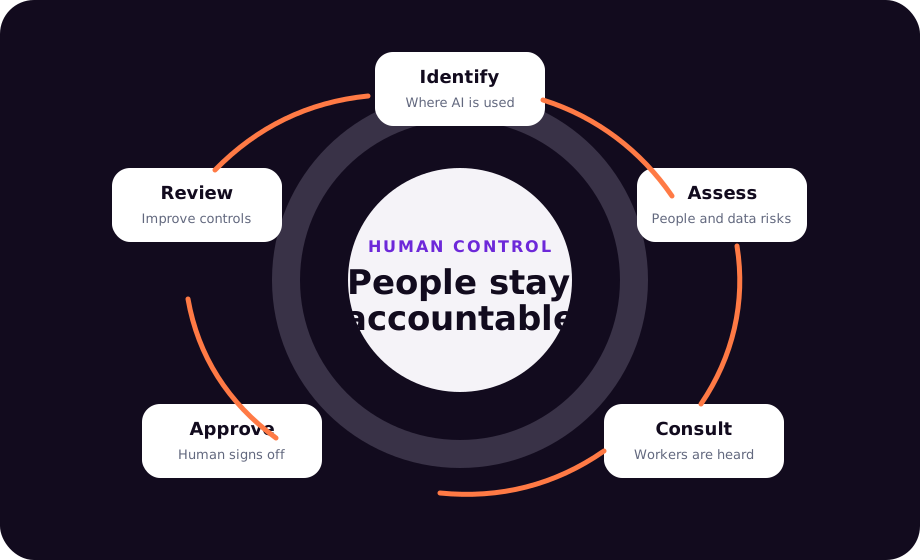
A person or team is responsible for each significant AI use case across its lifecycle.
Humans check AI outputs before high-impact, sensitive or customer-facing use.
People can pause, override or stop an AI system that behaves unexpectedly or causes risk.
Affected people receive appropriate information when AI use matters to them.
AI systems are tested before deployment and monitored for bias, drift, misuse and harm.
Workers understand AI limitations and know how to avoid over-reliance.

Agentic AI systems can combine generative AI with tools, data and workflows to complete multi-step tasks. These systems may operate with more autonomy than ordinary AI assistants, making permissions, access controls, logging, audit trails, testing and human approval more important.
Know who is responsible across the AI lifecycle.
Assess effects on people, the organisation and the wider community before deployment.
Use existing risk frameworks and dedicated AI controls.
Tell users, workers and stakeholders what they need to know.
Review performance before and after deployment.
Maintain meaningful human control and the ability to stop unsafe use.