Quick Summary
Overview: Australia is shaping AI through safety work, ethics guidance, skills, infrastructure, research and practical adoption. Workplaces should watch these developments because they influence expectations for responsible use.
- Australia is developing a practical AI governance landscape.
- Responsible AI adoption is linked to productivity and trust.
- Privacy, cyber security and workplace impacts remain central.
- Practical next step: Track official guidance and translate it into practical workplace controls, training and reporting.

A blue data network image representing the Australian AI industry and digital capability. Source: Unsplash.
Australia is shaping the AI industry through guidance, public sector leadership, research, privacy regulation, cyber security expectations and growing business adoption.
It affects employers, directors, workers, technology teams and organisations planning long-term AI capability.
Readers will learn how national direction connects to workplace governance.
Why this matters in practice
Australia is shaping AI through safety work, ethics guidance, skills, infrastructure, research and practical adoption. Workplaces should watch these developments because they influence expectations for responsible use.
In Australia, workplace AI should be considered in the context of privacy, cyber security, work health and safety, workplace relations, discrimination risk and ordinary management accountability. The right control depends on what the AI is used for, who uses it, what data it touches, how many people may be affected and whether the output can be properly checked.
A practical workplace example
A business adopting AI may not be directly regulated by a single AI law, but Australian guidance can still shape what good practice looks like for transparency, accountability and human oversight.
The important point is that governance should follow the actual workflow. A tool that looks low risk in isolation can become higher risk when it changes a decision, influences a worker, handles personal information or produces a record that others rely on.
Common mistakes to avoid
- Waiting for perfect regulation before acting.
- Ignoring voluntary guidance.
- Treating AI strategy as separate from workplace practice.
- Failing to connect skills, safety and governance.
Governance considerations
Good governance does not need to be complicated, but it should be deliberate. A workplace should be able to explain why AI is being used, what controls apply, who is accountable and how concerns are reviewed.
- Track Australian AI guidance.
- Align workplace rules with recognised principles.
- Invest in AI literacy.
- Review high-risk use more carefully.
- Keep leadership accountable for adoption decisions.
Human oversight and accountability
Human review should be meaningful. The reviewer needs enough information, authority and time to question the output, seek evidence, override the result or escalate the matter. AI should support human judgement, not remove responsibility from people.
Privacy, records and review
Before AI is used with workplace information, organisations should consider whether personal, confidential or sensitive data is involved. They should also decide what records are kept, how outputs are checked and when the use should be reviewed or retired.
For related guidance, see AI governance, legal awareness, AI literacy and training.
For workplaces, the important point is that AI governance is becoming a normal part of good management, not a specialist side issue.
Australia is taking a guidance-led approach
Australian AI policy has focused on practical guidance, safety, responsible adoption and risk-based controls. That gives organisations a direction without assuming every AI use is the same.
The National AI Plan and AI adoption guidance show a clear focus on capability, safety and productivity.
Workplace governance is part of the bigger picture
The national conversation can feel abstract, but the workplace implications are concrete: who is accountable, how data is protected, how workers are informed and how AI-assisted decisions are reviewed.
Related Articles

Australia's National AI Strategy: What the National AI Plan Means for Workplaces
A workplace-focused explainer on Australia's National AI Plan, the current national direction for AI opportunity, adoption and safety.
Read article →
What Is Frontier AI?
A plain-English guide to frontier AI, why advanced models matter for workplace governance and what controls leaders should consider.
Read article →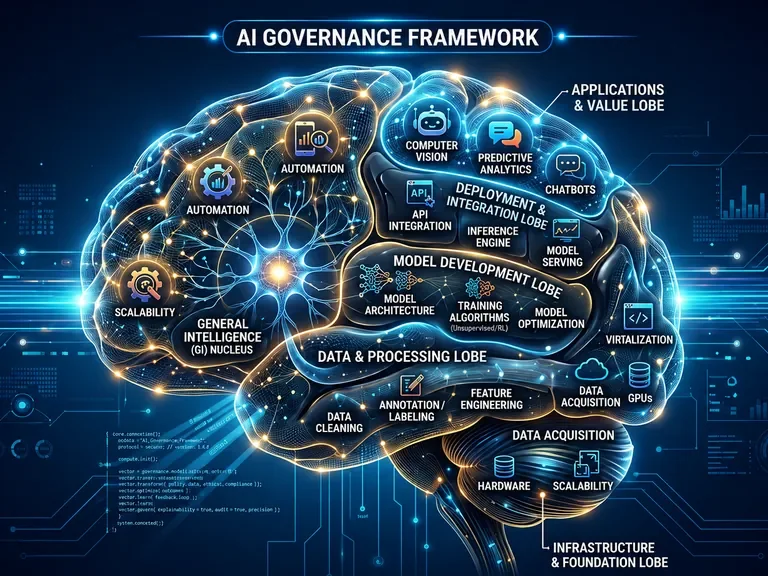
Workplace AI Governance Framework
Understand the practical building blocks for workplace AI governance in an Australian context.
Read article →What businesses should watch
- New government guidance and templates.
- Privacy expectations for AI products.
- Cyber security controls for connected systems.
- Director and leadership expectations for AI oversight.
- Community expectations around transparency and fairness.
Frequently Asked Questions
How is Australia shaping AI?
Through national policy, adoption guidance, AI safety work, privacy regulation, cyber security expectations and industry capability building.
What does this mean for workplaces?
AI governance should become part of normal risk, leadership and workforce planning.
Is Australian AI law settled?
No. Organisations should follow current laws and official guidance while monitoring reform.
Where should businesses start?
Start with visibility, accountability, risk management and staff training.
Key Facts
- Australia is developing a practical AI governance landscape.
- Responsible AI adoption is linked to productivity and trust.
- Privacy, cyber security and workplace impacts remain central.
- Leaders should monitor official guidance as it evolves.
- Workplace AI governance turns national principles into local practice.
Useful Australian Resources
These links are provided for general education and context. They are not a substitute for advice about your organisation's circumstances.
In Short
Australia is shaping the AI industry through guidance, public sector leadership, research, privacy regulation, cyber security expectations and growing business adoption.
Next step: Track official guidance and translate it into practical workplace controls, training and reporting.